Never in a million years did I think accounting would land me an AI sales job. If that seems unlikely to you, too, buckle up for a real ride.
The late Michael Rolleri, one of my college professors, was an excellent teacher. I had the pleasure of being his student for three years across a range of accounting classes, from Accounting 101 to Audit and Governmental Accounting (fun!). His depth and range of accounting knowledge were second to none. But out of everything I was fortunate to learn from him, the one thing that’s been embedded in my brain for the past 15 years is a piece of advice that seemed unbelievable when he shared it: start in accounting and it would be the foundation for anything I wanted to do with my career.
That seemed unbelievable because I didn’t even want to be an accountant at all. At that point I was thinking about finance, but as a child, I always wanted to be an architect or an engineer. I was obsessed with numbers and enamored by the idea of structural plans on a blue sheet of paper. What really drove that passion was the pure beauty of bridges. Every time we trekked into Whitestone, NY, to see family, I truly felt awe at each bridge’s unfathomable size and precision. I felt in my soul that I was born to design and build bridges. The dream was so real that when I was 12, my uncle gifted me an old-school engineering ruler. (Okay, it was probably just a regular ruler, but it was the thought that counts!)
My dream of building bridges lasted until I started playing football in high school. Then it was goodbye engineer, hello Division I, leading to a career as an NFL punter. Because of course making it as a professional athlete is so much easier than building bridges, right?
So I enrolled at Wagner College on Staten Island, putting down the ruler for a football and a lucrative major in Business Administration (Undecided). If you can read between the lines, Wagner didn’t have an engineering program, so that fell by the wayside immediately.
After a year at Wagner, I transferred to the University of New Haven to continue my journey to the NFL. Ironically, UNH did have an engineering program, but that was no longer my passion. Being so close to Wall Street, I decided to pursue a degree in Finance because I thought, “I’m good with people and I like numbers; let’s blend the two together” (talk about foreshadowing). After three years of finance courses, various internships, and the realization that the NFL was a bit out of reach, I genuinely had no idea what job I was gunning for. I was only certain of three things: I liked playing in Excel, I liked talking to people, and I wanted to make money.
One day, right in the middle of class, Professor Rolleri pulled me aside and asked me what I was planning to do after college. I confidently replied, “something in finance,” assuming that was specific enough to answer his question. He played along, commended my “clear” vision, and gently suggested I start in public accounting. I can still hear his voice today: “Anthony, if you start in finance, it will be tough to pivot back into accounting. But if you start in accounting, you can go anywhere.”
Talk about a powerful statement.
I can go anywhere?
Anywhere.
To this day, I have no idea why he specifically chose me to pull out of class, but his words genuinely changed my life forever.
Given my finance curriculum, I had already taken some accounting courses, so it was easy to add a minor in accounting (talk about lucky). Although this did mean loading up on accounting courses the spring semester of my senior year. While my classmates were taking Intro to Beer and Wine 101, I was taking the densest accounting courses you can think of (shout-out to International Taxation). I then applied to every Big 4 internship I could find.
I did not land a single one.
Fortunately, a good friend introduced me to Marcum LLP, where she had been working for the past year. She helped me prepare the day before the Saturday interview and told me I should choose Audit over Tax (because of course I didn’t understand the difference). Looking back, I’m pretty sure I botched the interview because I had no idea what I was talking about, but I had a strong recommendation from my friend and the following week I received an offer to become an auditor. If you had asked me back then if I thought a Saturday afternoon at an accounting office would eventually put me at the forefront of building the future of accounting with AI, I would have laughed and asked you what AI was.
My career since then has been nothing short of unique:
I started as an auditor staffed on construction and healthcare clients, as well as the occasional EBP.
I transitioned into a real estate management company accountant and corporate FP&A analyst at the world’s largest alternative asset manager.
I later became a corporate finance and fund accounting specialist for a mutual fund, working directly for the CFO.
I pivoted to the consulting world and was staffed in product control at an investment bank and as a chief of staff for a CFO at an alternatives shop.
And finally, I’m now at Basis as the GTM demo guy (aka sales), where I have the pleasure of being a thought partner to my former accounting colleagues about how AI is shaping the future of the profession. And yes, I now know what AI is.
Nothing about my career has been a straight path. Nor would I change a single thing. On the other side of the coin, I know plenty of people with the same degree I have who made a career in public accounting or moved into a more traditional controllership role. Either path, whether straight or curvy, is available to those who enter the world of accounting.
For me, I owe it all to a Connecticut CPA who was a fantastic, caring professor and showed interest in his students. I also owe it to accounting itself, which has opened doors that I didn’t even know existed. And most importantly, I owe it to my wife, who’s been nothing less than fully supportive and by my side throughout this crazy ride I call a career.
At 21 years old, I would never have thought accounting would be the reason I landed a sales job. But here I am, using this beautiful foundation of knowledge to try to improve the world of accounting. So with that I say thank you, accounting. I’ll spend the rest of my life trying to give back to a profession that’s given me so much.
Now normally, this would be a nice segue for a sales pitch or recruiting tactic. But not this story. This is purely my ode to accounting. And to anyone pondering a degree in accounting who may go back and forth on whether to pursue this profession or do something else, I say this with everything in my soul: go for it.
It can literally take you anywhere.
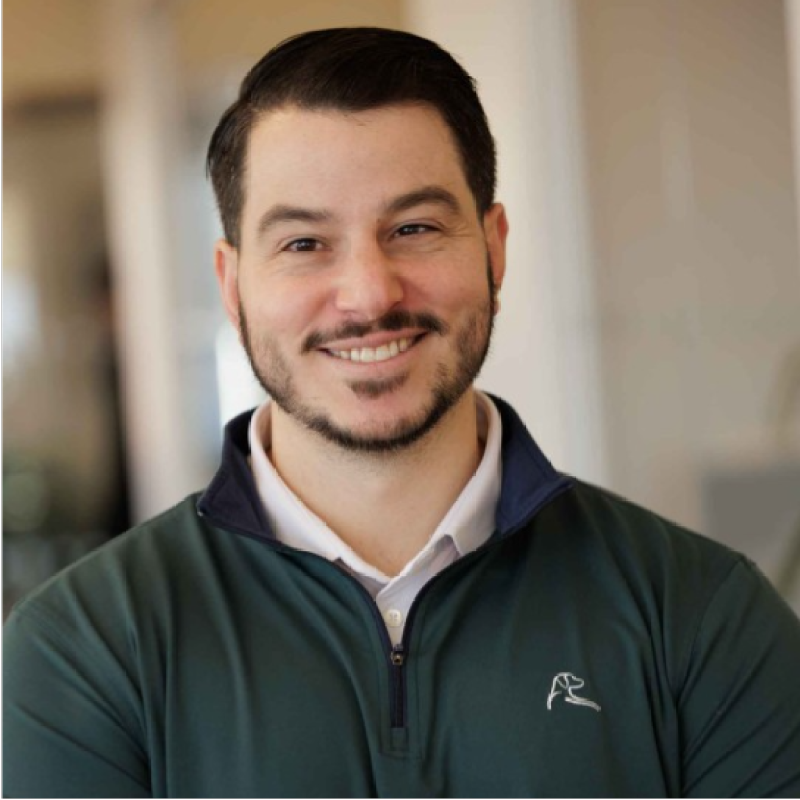
Anthony Greenfield is a member of the Accounting Solutions team at Basis. Special thanks to Paul DeCarlo for inspiring this piece.



.png)